
Not knowing what to expect can make asking for help difficult. You may wonder what a day in rehab involves, what will be expected of you and how much say you will have in your care.
Residential treatment at Cherrywood House begins with admission and assessment, followed by therapeutic work and planning for life after treatment.
Before Arrival: The Admission Process
Initial Contact
Everything begins with a phone call or email. Our admissions team will have a confidential, pressure-free conversation to understand your situation. There are no wrong answers and no judgements. This conversation helps us understand:
- What substances are involved
- How long the person has been using
- Medical history and any co-occurring conditions
- Whether medical detox is likely to be needed
- Whether a bed is available and timing
We aim to make this first contact as easy as possible. Many people who call us are frightened, ashamed, or reaching out on behalf of someone else. We meet all of that with patience.
Pre-Admission Assessment
Before arrival, our clinical team completes a more detailed assessment to build an individual treatment plan. This is not a test, it is the beginning of personalised care.
Practical Preparation
We provide a clear list of what to bring: comfortable clothing, toiletries, any current medications (in original packaging), and identification. We provide a list of what to leave behind, primarily things that could distract from the recovery process.
Day 1-3: Arrival and Settling In
Welcome and Orientation
On arrival, a member of the care team welcomes you. We show you to your room, walk you around the facility, and take time to answer questions. The goal is to reduce anxiety and help you feel safe.
Medical Assessment
Within the first few hours, you meet with our medical team for a thorough assessment. This includes physical health review, review of current medications, and assessment of withdrawal risk. This shapes the medical support plan.
Withdrawal Management (Where Needed)
For clients who are physically dependent, the first few days may involve medically managed withdrawal. Our clinical staff monitor you throughout this phase. Medication support is provided where clinically indicated to reduce discomfort and manage health risks.
For many clients, withdrawal is less dramatic than they feared, especially when properly managed.
Getting to Know the Environment
We don’t throw people into intensive therapy on day one. The first days are about settling in, meeting other clients and staff, and beginning to feel safe. Recovery cannot happen in a state of constant high alert.
Days 4-7: Beginning the Therapeutic Work
Once the acute physical phase is past, therapeutic work begins properly.
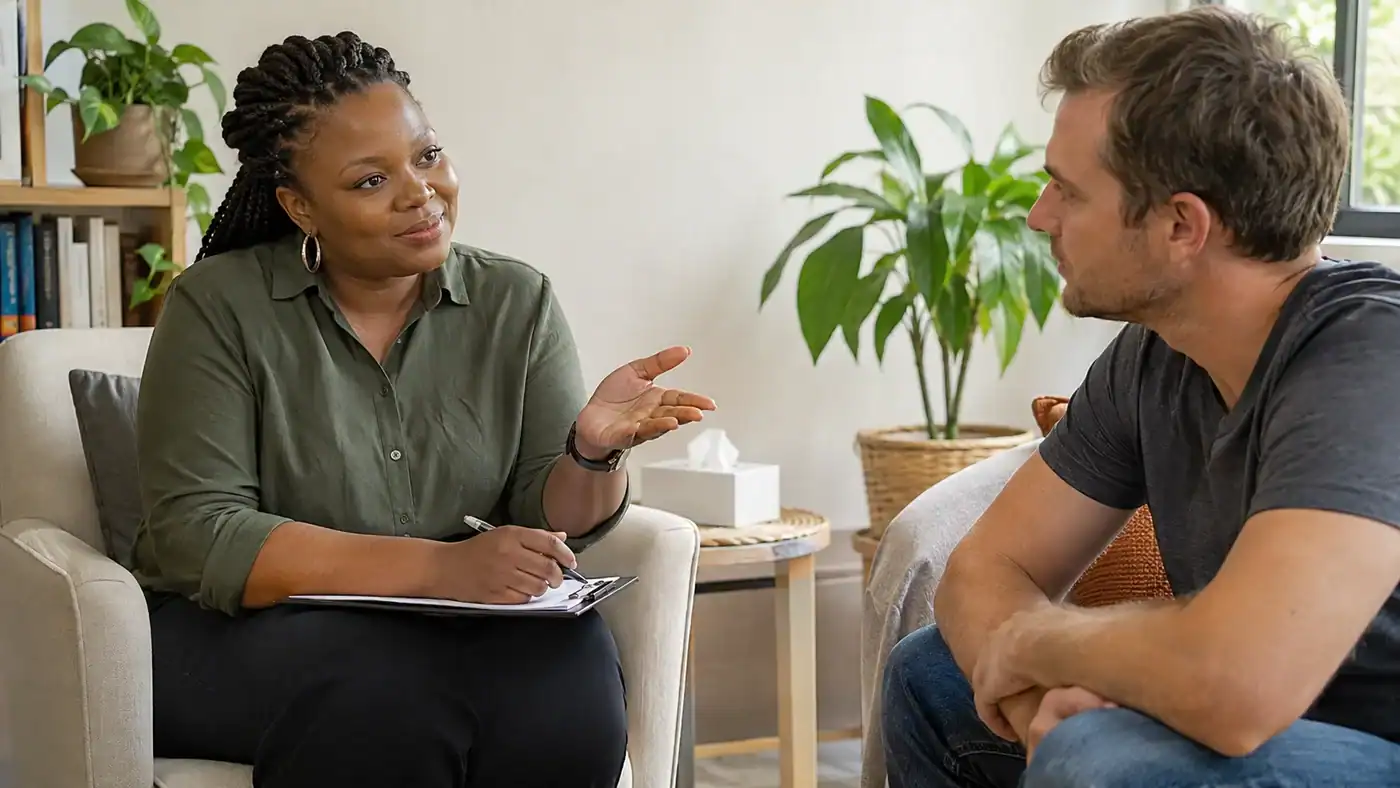
Individual Therapy Sessions
You meet regularly with your assigned therapist. These sessions are the heart of the programme. Depending on what is most relevant to your situation, your therapist may use:
- Cognitive Behavioural Therapy (CBT): identifying and changing thought patterns that drive addictive behaviour
- Dialectical Behaviour Therapy (DBT): building emotional regulation, distress tolerance, and mindfulness skills
- Trauma-focused therapy: addressing past trauma that underlies addiction
- Schema therapy: working with deep-seated beliefs about the self and the world
These sessions are not interrogations. They are collaborative conversations, a guided process of understanding yourself more clearly.
Group Therapy
Daily group therapy sessions bring clients together with a therapist to explore shared experiences, provide mutual support, and build the social skills that support recovery. Many clients find that hearing others describe their own experience is one of the most powerful aspects of treatment.
Group therapy at Cherrywood House is led by experienced facilitators and operates in a carefully maintained atmosphere of safety and confidentiality.
Daily Structure
Structure is therapeutic in itself. Addiction often involves chaotic schedules, disrupted sleep, and absence of routine. Our daily programme re-establishes rhythm:
Typical Day:
- 07:00 Wake-up and breakfast
- 08:30 Morning group / mindfulness session
- 09:30 Individual therapy (on scheduled days) or reflective journalling
- 11:00 Group therapy session
- 13:00 Lunch
- 14:00 Recreational activities / wellness programme
- 16:00 Peer support session / afternoon group
- 18:00 Dinner
- 19:00 Evening activities / 12-step meeting / personal time
- 21:30 Reflection / quiet time
- 22:30 Lights out
Weeks 2-4: Deepening the Work
As the programme progresses, therapeutic work goes deeper. Early sessions often focus on stabilisation, on getting steady. Later sessions move into the harder territory: childhood experiences, relationship patterns, the role of trauma, identity, and what life looks like without the substance.
Family Therapy
Family sessions are scheduled during treatment. Addiction affects everyone who loves the person who is addicted. Family therapy begins to address the patterns that developed around addiction, including enabling, co-dependency and communication breakdowns, and builds the family’s capacity to support recovery after treatment.
Families who engage with this process report that it transforms their experience as much as the person in treatment.
Life Skills and Practical Planning
Recovery requires practical skills: budgeting, managing stress, handling difficult conversations, recognising relapse triggers. Our programme includes structured life skills work alongside the clinical elements.
Mindfulness and Wellness
Daily mindfulness practices, yoga, physical activity, and nutrition form an important part of the programme. The body and mind heal together. Many clients arrive physically depleted. Regular meals, fresh air, exercise, and sleep are foundational.
Final Week: Preparing for Life After Treatment
Relapse Prevention Planning
With your therapist and care team, you build a detailed relapse prevention plan. This includes:
- Your personal early warning signs
- High-risk situations and how to manage them
- Your support network: who to call, what to say
- What to do if you slip
Discharge Planning
Your discharge plan includes practical elements: returning to work, re-establishing routines, handling environments associated with past use, and knowing where to turn if things become difficult.
After Residential Treatment: Aftercare
Recovery continues after residential treatment ends.
Research consistently shows that longer engagement with treatment, especially structured aftercare, significantly improves long-term outcomes.
Our 12-month aftercare programme includes:
- Group aftercare sessions
- Family support components
We stay in contact. We care what happens to you after you leave.
FAQ: What Happens in Rehab
How long does residential rehab take?
At Cherrywood House, programmes are personalised to the individual. Residential treatment is typically 4-8 weeks, followed by 12 months of free aftercare support.
Will I have to share a room?
Our boutique model with a maximum of 17 clients allows for comfortable private and shared accommodation. The specifics are discussed on admission.
Can I have my phone in rehab?
Phone and device use is managed carefully during treatment. This is not punitive, it is to protect the focus of the recovery environment. The boundaries are explained clearly on admission.
Can family visit during treatment?
Family involvement is part of our programme. Visiting policies and family therapy scheduling are discussed on admission and structured around what is therapeutically appropriate.
What happens if I feel like leaving during treatment?
This is common, especially in the early and middle stages of treatment. Our clinical team is trained to support you through these difficult moments. We ask that clients speak to their therapist before making any decision about leaving.
Is everything confidential?
Yes. Everything that happens within treatment is strictly confidential. Our ethical and legal obligations to client confidentiality are absolute.
If you would like to know more about the Cherrywood House programme or are ready to enquire about admission, call us at +27 79 714 1966 or email info@cherrywoodhouse.com.
Related Cherrywood House support
Need confidential, professional support? Speak with Cherrywood House about the right next step.

