
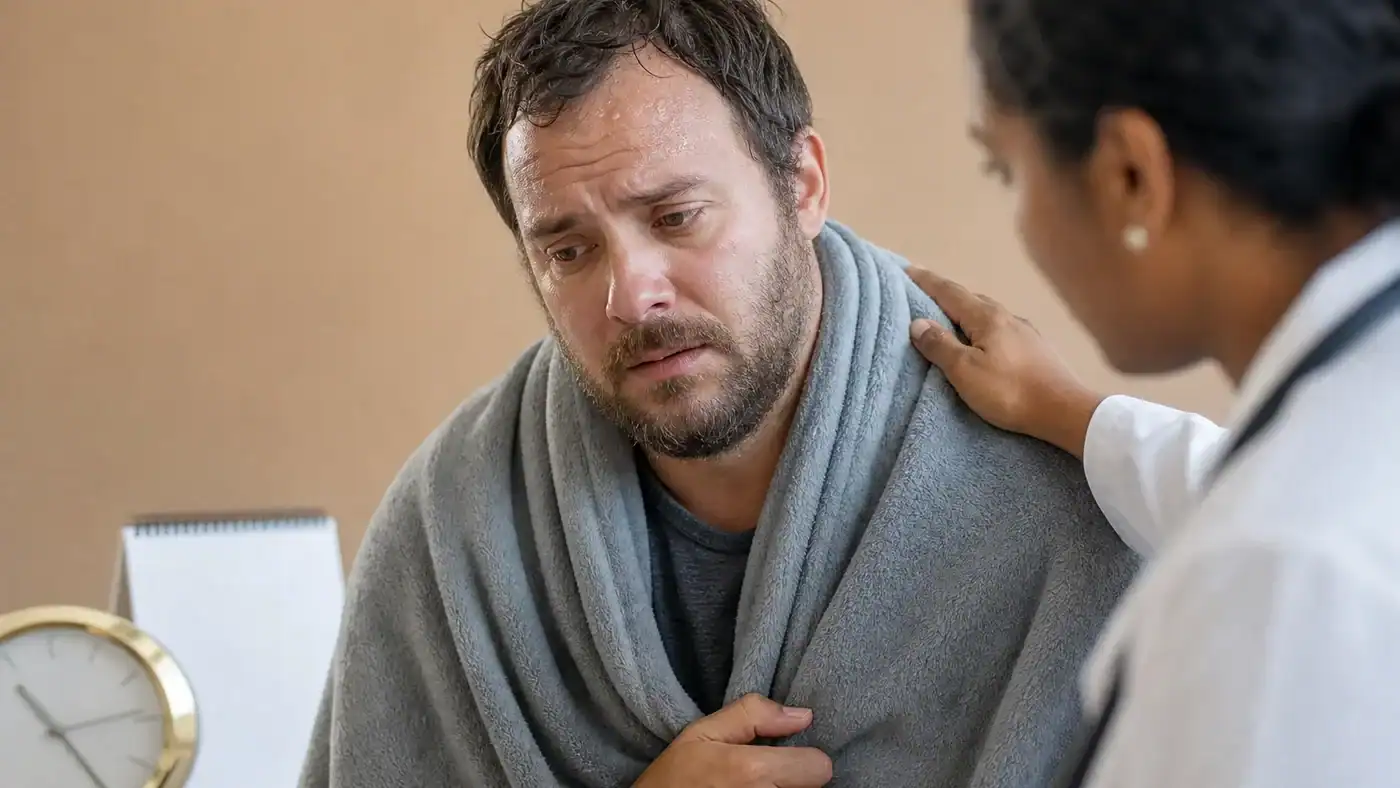
Alcohol withdrawal is one of the few withdrawal syndromes that can be
directly life-threatening. Unlike heroin or other drug withdrawal –
which are profoundly uncomfortable but rarely fatal – severe alcohol
withdrawal can cause seizures, delirium, and death.
This is not said to frighten, but to be clear: if someone who is
physically dependent on alcohol is planning to stop drinking, they
should not do so without medical supervision.
This guide explains the symptoms, timeline, and why professional
support is critical.
Why Does Alcohol Withdrawal
Happen?
Alcohol is a central nervous system depressant. With prolonged heavy
use, the brain adapts by increasing its excitatory activity to
compensate for the constant depressant effect. When alcohol is removed
suddenly, this compensatory excitation is no longer needed – but the
brain doesn’t switch it off immediately. The result is a hyperexcitable
nervous system: the mechanism behind withdrawal symptoms.
The severity of withdrawal depends on:
- Duration of heavy drinking – years of heavy use
creates deeper neurological dependence - Volume consumed – higher daily intake correlates
with more severe withdrawal - Previous withdrawal episodes – each withdrawal
event can sensitise the brain to future withdrawals (the “kindling”
effect) - Age and general health – older age and poor health
increase severity - Concurrent medical conditions
The Alcohol Withdrawal
Timeline
Stage 1: Hours 6-24 – Early
Symptoms
Symptoms begin within 6-24 hours of the last drink:
- Anxiety and agitation – often the first signs;
restlessness and inability to settle - Tremors – especially of the hands; can progress to
whole-body shaking - Sweating – profuse, often cold sweating
- Nausea and vomiting
- Headache
- Elevated heart rate and blood pressure – measurable
increases that require monitoring - Insomnia
For people with mild dependence, symptoms may remain at this level
and gradually resolve over 24-48 hours. For those with more severe
dependence, this is just the beginning.
Stage 2: Hours 24-72 –
Increasing Risk
In the 24-72 hour window, withdrawal can intensify significantly:
- Seizures – alcohol withdrawal seizures typically
occur in this window. They are generalised tonic-clonic (grand mal)
seizures. They occur without warning and can cause serious injury. This
is one of the primary medical risks of unsupervised alcohol
withdrawal. - Extreme agitation
- Severe tremors
- Worsening cardiovascular effects
This window is the highest-risk period for seizure. Anyone
with a history of heavy, long-term drinking should not attempt
withdrawal without medical support.
Stage 3: Hours
48-96 – Delirium Tremens (DTs) Risk
The most severe complication of alcohol withdrawal is
Delirium Tremens (DTs) – a medical emergency that
occurs in approximately 3-5% of people experiencing alcohol
withdrawal.
DTs typically begin 48-96 hours after the last drink and are
characterised by:
- Severe confusion and disorientation – the person
does not know where they are or what is happening - Hallucinations – typically visual (seeing insects,
animals, or threatening figures) - Extreme agitation and combativeness
- Fever
- Rapid heart rate and severe hypertension
- Seizures (in addition to or following earlier
ones)
Without treatment, DTs have a mortality rate of up to 37%. With
appropriate medical management in a clinical setting, this drops to
below 2%.
DTs is a medical emergency. Call emergency services
immediately if suspected.
Who Is at Risk of Severe
Withdrawal?
Not everyone who stops drinking will experience severe withdrawal.
The risk is higher for:
- People who have been drinking heavily daily for months or years
- People who have gone through alcohol withdrawal before (especially
those who have had seizures) - People over 50
- People with liver disease or other significant medical
conditions - People who are malnourished
If you are unsure about someone’s risk level, err on the side of
caution and seek medical assessment before they stop drinking.
Medical Management of
Alcohol Withdrawal
Medically supervised alcohol withdrawal dramatically reduces the risk
of severe complications. The core approach includes:
Benzodiazepine Therapy
Benzodiazepines (such as diazepam or lorazepam) are the gold standard
treatment for alcohol withdrawal. They calm the hyperexcitable nervous
system, prevent seizures, and reduce the risk of DTs. The dose is
carefully titrated against the severity of symptoms.
Vitamin Supplementation
Alcoholism is commonly associated with thiamine (Vitamin B1)
deficiency, which can cause a serious neurological complication called
Wernicke’s encephalopathy. High-dose intravenous thiamine is
administered as a standard precaution.
Hydration and Electrolytes
Vomiting and sweating cause dehydration and electrolyte disturbance.
IV fluids are administered as needed.
Continuous Monitoring
Vital signs, neurological status, and symptoms are monitored
continuously. The CIWA-Ar (Clinical Institute Withdrawal Assessment for
Alcohol) scoring tool is used to guide treatment adjustments.
Psychiatric Support
Anxiety, depression, and emotional distress during withdrawal are
significant. Our clinical team provides consistent support and
monitoring for mental health during this phase.
Alcohol Withdrawal at
Cherrywood House
At Cherrywood House, alcohol withdrawal is managed by our clinical
team with the protocols described above. We do not allow clients to go
through withdrawal unsupported – it is both unsafe and far more
difficult than it needs to be.
After the acute withdrawal phase, clients move into residential
rehabilitation – the therapeutic work of understanding and addressing
the roots of alcohol addiction. This is where the real work of recovery
begins.
FAQ: Alcohol Withdrawal
How long does alcohol withdrawal last? Mild
withdrawal typically resolves within 2-7 days. Severe withdrawal
including DTs can last 5-10 days. Post-acute symptoms (anxiety, sleep
disturbance, mood swings) may persist for weeks to months.
Is alcohol withdrawal dangerous? Yes, potentially.
Alcohol is one of only a few substances where withdrawal can be directly
fatal. Seizures and Delirium Tremens are the primary risks. Medical
supervision is strongly recommended.
Can you do alcohol detox at home? We strongly advise
against it for anyone with significant physical dependence. The risk of
seizure or DTs without access to emergency medical support makes home
detox dangerous.
What medications are used in alcohol withdrawal?
Benzodiazepines are the primary treatment. Anticonvulsants,
beta-blockers for heart rate control, and IV vitamins are also used
depending on the clinical picture.
How quickly can Cherrywood House admit someone in alcohol
withdrawal? Contact us as soon as possible. We will assess the
situation and prioritise admission where the clinical need is
urgent.
Alcohol withdrawal is serious. Don’t manage it alone. Cherrywood
House provides safe, medically supervised detox in Cape Town. Call +27
79 714 1966 for immediate, confidential support.
Need safe, professional support? If you are concerned about addiction, withdrawal, or relapse risk, contact Cherrywood House to discuss the right next step.

